Alabama
Ghost Tours in Birmingham
Self-guided haunted tours, ghost walks and dark history in Birmingham, AL — explore at your own pace, any night you like.
Founded in 1871 at the crossing of two railroad lines, Birmingham earned its moniker as the "Magic City" when it exploded into an industrial titan almost overnight. Yet behind the thunderous blast furnaces and gleaming high-rises lies an undercurrent of violence, sudden tragedy, and enduring urban folklore. Exploring downtown Birmingham reveals a landscape where historic architecture rubs shoulders with chilling local legends.
With a self-guided smartphone ghost walk, you can wander through the historic heart of the city entirely on your own schedule. This format allows you to pause in the quiet shadows of century-old structures without rushing to keep up with a crowd. Along the way, you will encounter the city’s most storied and eerie landmarks. Stand before the stately Redmont Hotel, where country music icon Hank Williams spent one of his final nights, and where guests have long reported peculiar cold spots and disembodied footsteps.
Your journey winds through the gritty history of Madam Lou’s District, recalling the rowdy vice corridor of Birmingham’s frontier days, and down Axe Syndicate Alley, where rumors of early twentieth-century underworld disputes still whisper between brick facades. From the quiet, book-lined halls of the Linn Henley Library to the towering historic presence of the Tutwiler Hotel and the Clark Building, downtown holds layer upon layer of spectral intrigue.
Whether you are drawn by a fascination with the paranormal or a genuine love for deep Southern history, a self-guided walk offers an intimate way to experience Birmingham after dusk. The streets take on a different character beneath the amber streetlamps, inviting you to listen closely to the tales left behind by industrialists, outlaws, and restless spirits.
Haunted tours in Birmingham (1)
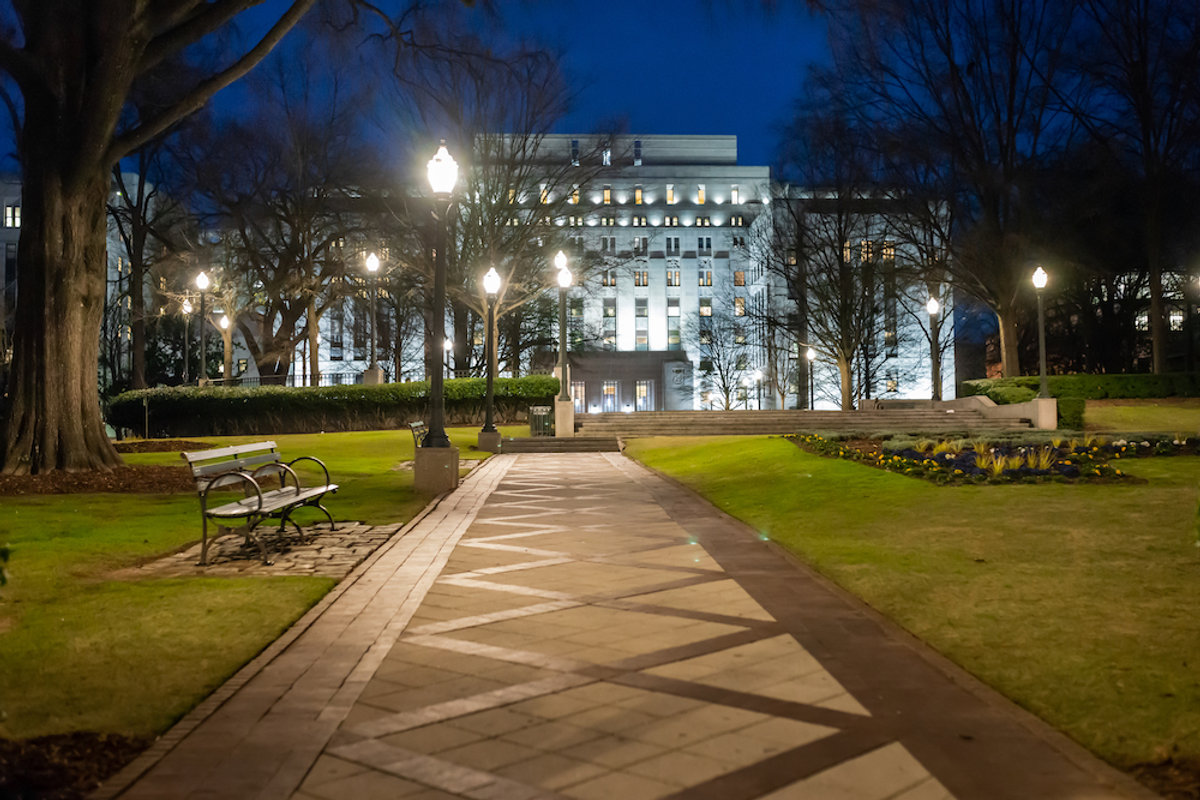
Birmingham ghost tour map
Approximate starting locations for each tour in Birmingham.
The Dark and Storied Past of Birmingham
Unlike many historic Southern cities with colonial or antebellum roots, Birmingham was forged entirely in the post-Civil War boom of 1871. Mineral wealth in iron ore, coal, and limestone catalyzed an unprecedented rush of fortune seekers, laborers, and speculators. In its opening decades, Birmingham bore closer resemblance to a lawless frontier outpost than a refined metropolitan center. Disease struck early; an 1873 cholera epidemic decimated the nascent population, filling mass graves and leaving the settlement teetering on collapse before the railroads spurred its survival.
As the population surged, so did civil unrest and violent crime. Perhaps the darkest chapter of this early period occurred in December 1888 with the infamous Hawes Riot. Richard Hawes, an engineer accused of brutally murdering his wife and two young daughters, sat locked inside the Jefferson County Jail. An infuriated mob numbering in the hundreds marched on the jailhouse, demanding vigilante justice. Sheriff's deputies and armed volunteers opened fire into the charging crowd, killing more than ten citizens and wounding dozens more on the steps of the courthouse square. The blood spilled during that freezing winter night cemented the jail site’s reputation as one of the city's most tragic locations, with witnesses over the years claiming to sense a lingering aura of fury and grief in the vicinity.
Other corners of downtown harbor their own shadowy legacies. In the early 1900s, whispered rumors surrounded a secretive criminal element dubbed the Axe Syndicate, allegedly operating in forgotten alleyways behind commercial corridors. Nearby, places of worship like St. Paul’s Cathedral provided sanctuary amid rapid urban changes, while vice districts run by figures like Madam Lou Hennessy catered to transient ironworkers and traveling businessmen, leaving behind stories of backroom deals, sudden violence, and unresolved fates.
Architectural landmarks constructed during the early twentieth-century boom reflect both grandeur and ghostly traditions. The Redmont Hotel, opened in 1925, and the storied Tutwiler Hotel have accumulated decades of ghost lore, ranging from elevator doors opening onto empty corridors to spectral apparitions roaming upper guest floors. Even scholarly sanctuaries like the Linn Henley Library are tied to eerie anecdotes of drifting shadows among the archival stacks. Birmingham’s rapid ascent created intense human drama, making downtown a rich tapestry of history, tragedy, and enduring legend.
Haunted Stories & Guides
Salem Ghost Stories and the History Behind Them
Explore Salem’s haunted reputation through the Witch House, Ropes Mansion and Giles Corey, with history distinguished from ghost lore.
 Cemeteries
15 Haunted Cemeteries in America and the Ghost Stories Behind Them
From New Orleans' cities of tombs to a Salem burial ground older than the witch trials: fifteen American cemeteries worth visiting in daylight — who's buried there, what's documented, and what's legend.
 Haunted Towns
13 Haunted Towns in America for a Spooky Weekend Trip
Small towns where the whole place seems in on the story: thirteen walkable American towns with genuinely dark histories, atmospheric main streets, and a self-guided ghost tour you can start whenever the sun goes down.