Florida
Ghost Tours in Pensacola
Self-guided haunted tours, ghost walks and dark history in Pensacola, FL — explore at your own pace, any night you like.
Pensacola claims a storied past stretching back to 1559, earning its reputation as America's first multi-year European settlement. Over nearly five centuries, five distinct national flags have flown above this Gulf Coast port: Spanish, French, British, Confederate, and American. With so many tumultuous shifts in power, devastating hurricanes, yellow fever epidemics, and wartime skirmishes, it is little wonder that the historic core harbors an impressive collection of ghost stories and unexplained phenomena.
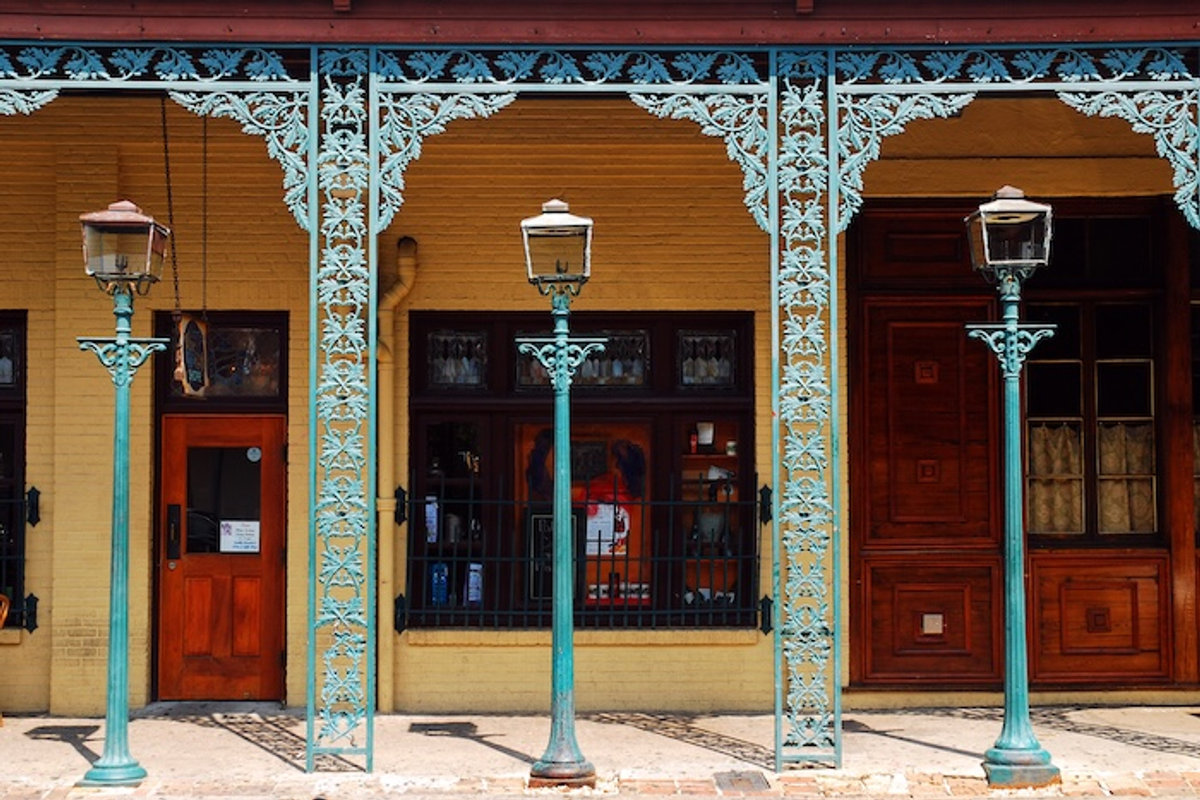
Taking a self-guided walking tour through Pensacola offers an atmospheric way to uncover these maritime and colonial legends on your own schedule. Wandering through Historic Pensacola Village and the cobblestone-accented streets of the Seville neighborhood, you can trace the footprints of Spanish conquistadors, Victorian merchants, and Civil War soldiers. At your own pace, you will encounter historic landmarks such as the stately Dorr House, the venerable Old Christ Church, and the storied brick corridors of Seville Quarter.
Whether you set out beneath the coastal sun or venture into the shadows after dusk, exploring Pensacola's haunted heritage invites you to look past the modern beach destination and confront its lingering shadows. Visitors frequently report strange cold drafts, shifting silhouettes, and the distant sound of church bells tolling without human hands. Armed with a smartphone-based self-guided itinerary, you can pause to admire antebellum architecture, take detours into historic plazas, and immerse yourself in the spine-tingling folklore that makes Pensacola one of the Gulf Coast's most intriguing paranormal destinations.
Haunted tours in Pensacola (1)
Pensacola ghost tour map
Approximate starting locations for each tour in Pensacola.
The Haunted History of Pensacola
Pensacola’s haunted heritage is inextricably tied to its status as the "City of Five Flags." Established by Spanish conquistador Don Tristán de Luna y Arellano in 1559, the nascent colony was battered by a catastrophic hurricane just weeks after arrival, leaving survivors stranded and setting a grim precedent for centuries of hardship. While St. Augustine often claims the title of the oldest continuous European settlement, Pensacola's violent early history of colonial warfare, shifting allegiances, and frontier disease fostered an enduring aura of unrest.
Throughout the eighteenth and nineteenth centuries, control of the deep-water harbor swung dramatically between Spain, Great Britain, and France before Florida was formally ceded to the United States in Plaza Ferdinand VII. In this very square, General Andrew Jackson accepted Florida as an American territory in 1821. Today, rumors persist that phantom figures in period dress occasionally appear in the plaza, fading into the humid night mist near the historic marker.
The nineteenth century brought waves of lethal yellow fever epidemics that devastated the port community. Quarantines were strict, and makeshift morgues and mass burial grounds were established throughout town. Old Christ Church, consecrated in 1832, is one of Florida's oldest surviving church buildings and served as a hospital and shelter during these crises, as well as a barracks and prison for occupying Union forces during the Civil War. Legend tells of restless spirits lingering beneath its floorboards and in the bell tower, where apparitions and phantom organ music have reportedly been experienced by modern visitors.
Nearby, the domestic and commercial architecture of the Seville district carries its own spectral weight. The Dorr House, an exquisite example of post-Civil War Greek Revival architecture built by Clara Barkley Dorr, is said to host gentle footsteps and flickering lights attributed to the matriarch herself. At the Lear/Rocheblave House, layered colonial and nineteenth-century occupations have inspired tales of unseen presences lingering along its wooden verandas. Even the industrial institutions tell stories; the Museum of Industry and the Pensacola Museum of History—housed inside the grand 1907 Pensacola City Hall—echo with unexplained footsteps and locked display cases that rattle without cause.
Perhaps nowhere is Pensacola’s haunted nightlife more famous than Seville Quarter. Originally constructed as an 1867 cigar warehouse, the complex contains stories of former barkeeps, tragic brawls, and lingering phantoms that allegedly tap patrons on the shoulder or manipulate lights after closing. Together, these sites form a tapestry of tragedy, persistence, and folklore that continues to enchant anyone drawn to the shadowy side of Florida's coastal past.
Haunted Stories & Guides
Salem Ghost Stories and the History Behind Them
Explore Salem’s haunted reputation through the Witch House, Ropes Mansion and Giles Corey, with history distinguished from ghost lore.
 Cemeteries
15 Haunted Cemeteries in America and the Ghost Stories Behind Them
From New Orleans' cities of tombs to a Salem burial ground older than the witch trials: fifteen American cemeteries worth visiting in daylight — who's buried there, what's documented, and what's legend.
 Haunted Towns
13 Haunted Towns in America for a Spooky Weekend Trip
Small towns where the whole place seems in on the story: thirteen walkable American towns with genuinely dark histories, atmospheric main streets, and a self-guided ghost tour you can start whenever the sun goes down.