Kentucky
Ghost Tours in Louisville
Self-guided haunted tours, ghost walks and dark history in Louisville, KY — explore at your own pace, any night you like.
Louisville, Kentucky is celebrated worldwide for thoroughbred racing and fine bourbon, but beneath its polished Southern charm lies a rich tapestry of supernatural folklore. At the heart of the city's ghostly reputation is Old Louisville, renowned as one of the largest contiguous preservation districts of Victorian architecture in the United States. Shaded by ancient oak canopies and illuminated by flickering wrought-iron gas lamps, these historic streets feel preserved in an earlier century. Walking among the sprawling brick and limestone residences, visitors encounter an atmosphere steeped in tales of lingering spirits, eccentric tycoons, and unexplained neighborhood mysteries.
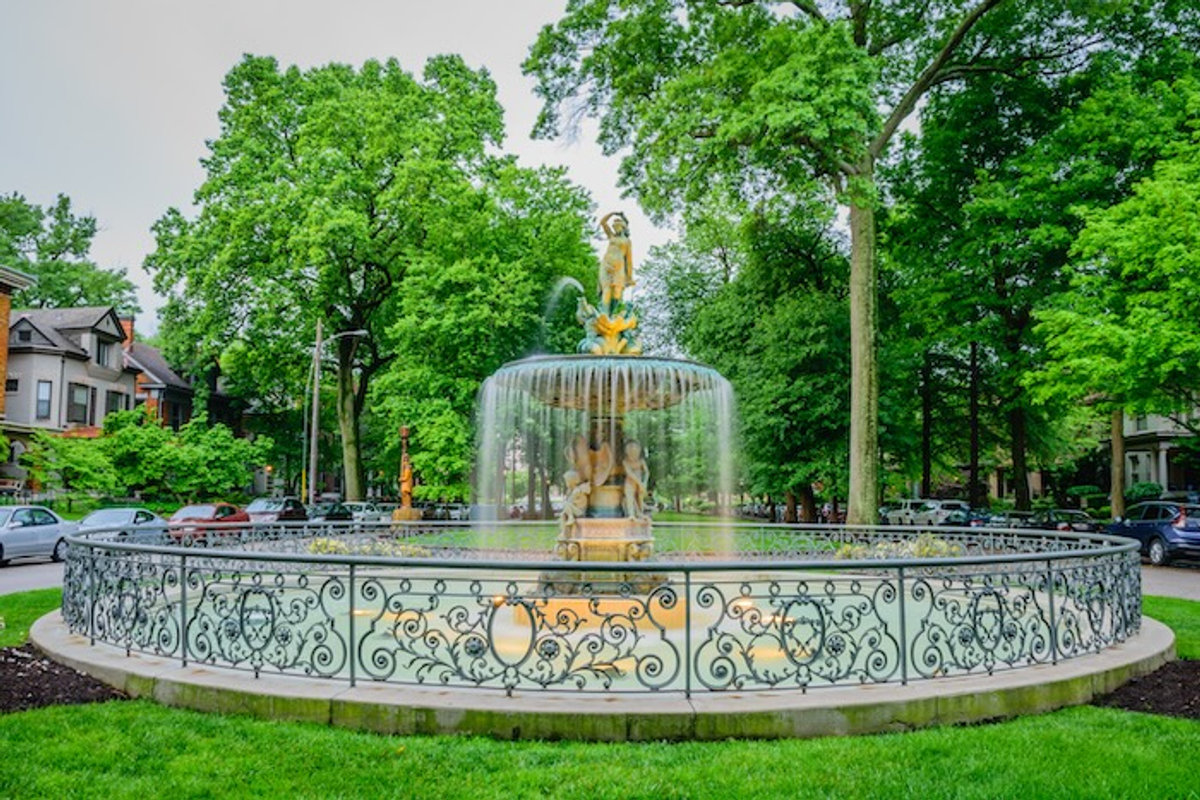
A self-guided walking tour provides the freedom to uncover Louisville's shadowy heritage at your own pace, pausing whenever a shadowed alcove or architectural detail catches your attention. The neighborhood’s opulent facades conceal stories of bitter rivalries, sudden tragedies, and spectral encounters reported across generations. Stroll along the gas-lit footpaths of Belgravia Court and past the iconic St. James Court Fountain, where the city's Gilded Age ambition remains on full display.
Along your route, you will pass landmarks rich in paranormal folklore, including the imposing DuPont Mansion, the castle-like Conrad-Caldwell House, and the whimsical yet storied Pink Palace. Nearby, the Central Park Bed & Breakfast sits close to the twisted, talisman-draped boughs of The Witches' Tree, a neighborhood icon wrapped in local superstition. Whether you are an architecture admirer or an enthusiast of ghost stories, exploring Old Louisville on foot offers an intimate look into the city's most haunting legends.
Haunted tours in Louisville (1)
Louisville ghost tour map
Approximate starting locations for each tour in Louisville.
The Gilded Shadows of Louisville’s Victorian Past
Louisville’s ascent during the nineteenth century transformed it from a rugged frontier settlement along the Falls of the Ohio River into an industrial powerhouse of the American South. Following the Civil War, the city experienced a massive economic boom fueled by river commerce, manufacturing, and railroads. Wealthy industrialists, merchants, and bourbon barons poured their fortunes into building a residential showcase south of downtown, creating what is known today as Old Louisville. Between the 1870s and the early 1900s, hundreds of grand residences arose in eclectic Victorian styles, ranging from Chateauesque stone mansions to ornate Queen Anne villas.
Yet alongside immense prosperity came vulnerability to sudden calamity and personal drama. In March 1890, one of the deadliest tornadoes in American history carved a catastrophic path through Louisville, leveling buildings, claiming scores of lives, and scarring the community's collective memory. According to neighborhood legend, the storm ripped through an old cypress tree where local practitioners of folk magic supposedly gathered; before the tree fell, a curse was said to have been uttered, promising that ruin would follow. The knotted, gnarled trunk that grew in its place became known as The Witches' Tree, where visitors still leave trinkets and ribbons to court good fortune.
The Gilded Age elite also left behind complex domestic legacies that continue to inspire ghostly tales. At the DuPont Mansion, built for wealthy paper magnate Alfred Victor DuPont, stories linger regarding his sudden and scandalous death in 1893. While official accounts recorded heart failure, persistent rumors claim he met his end under contentious circumstances at a nearby brothel, and visitors today often report phantom footsteps, strange cold drafts, and the scent of vintage cigars drifting through empty halls.
Further along the tree-canopied corridors of St. James Court and Belgravia Court, architectural masterworks such as the Romanesque Conrad-Caldwell House stand as monuments to bygone extravagance. Long after the original occupants passed, caretakers and passersby have described spectral silhouettes in high second-story windows and unexplained disturbances within the ornate wood-paneled chambers. Similarly, properties like The Pink Palace—originally constructed as a quiet residence before serving as a lively social club—carry accounts of elusive figures watching over the quiet pedestrian walkways. While historians study these structures for their exceptional craft and social significance, local lore preserves them as vessels of lingering energy from Louisville’s golden, yet troubled, Victorian epoch.
Haunted Stories & Guides
Salem Ghost Stories and the History Behind Them
Explore Salem’s haunted reputation through the Witch House, Ropes Mansion and Giles Corey, with history distinguished from ghost lore.
 Cemeteries
15 Haunted Cemeteries in America and the Ghost Stories Behind Them
From New Orleans' cities of tombs to a Salem burial ground older than the witch trials: fifteen American cemeteries worth visiting in daylight — who's buried there, what's documented, and what's legend.
 Haunted Towns
13 Haunted Towns in America for a Spooky Weekend Trip
Small towns where the whole place seems in on the story: thirteen walkable American towns with genuinely dark histories, atmospheric main streets, and a self-guided ghost tour you can start whenever the sun goes down.