Louisiana
Ghost Tours in New Orleans
Self-guided haunted tours, ghost walks and dark history in New Orleans, LA — explore at your own pace, any night you like.
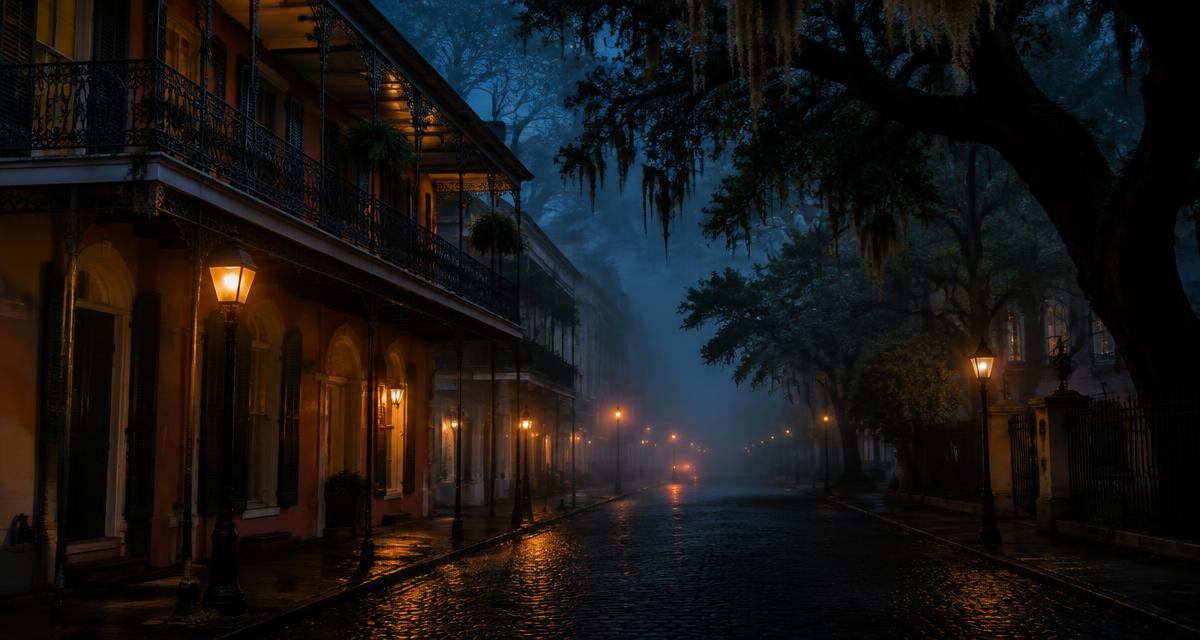
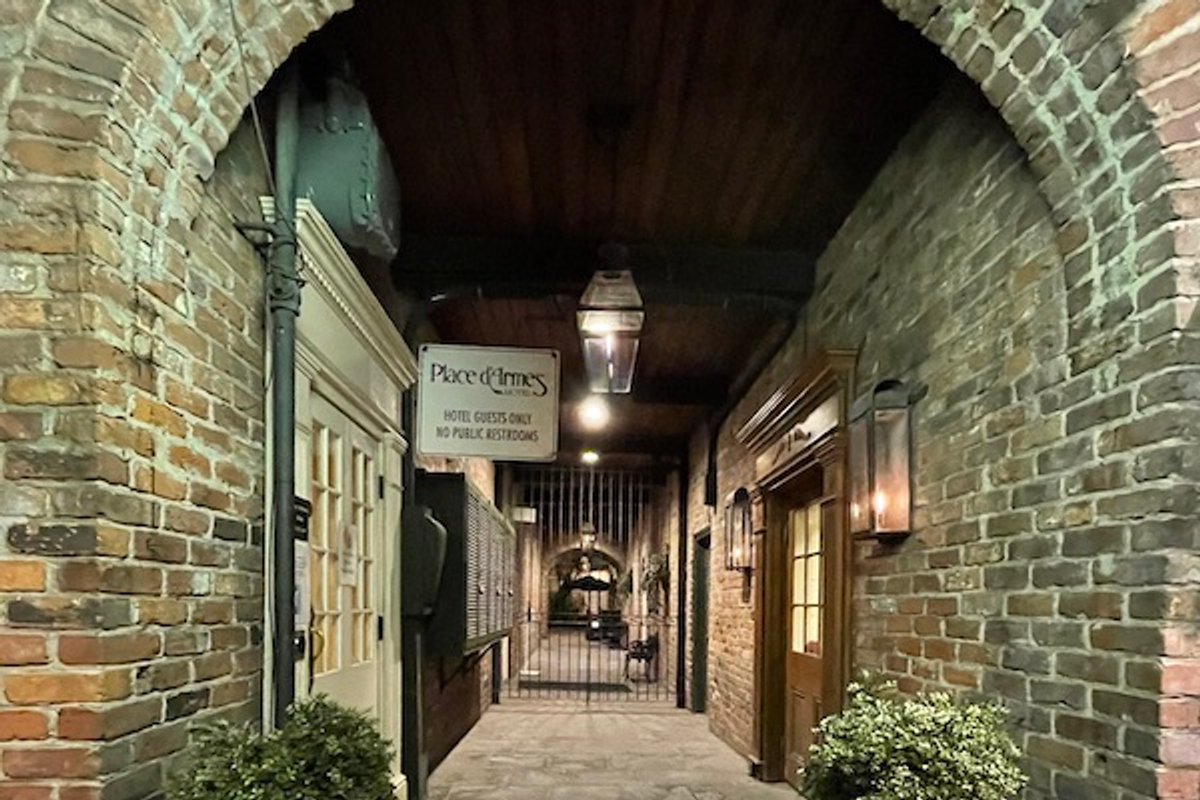
New Orleans is often celebrated as America’s most haunted city, and it takes only a single twilight walk beneath the wrought-iron balconies of the French Quarter to understand why. Centered along the crescent curve of the Mississippi River, this centuries-old enclave carries a distinct atmosphere where lively celebration mingles with shadowy folklore. From the neon glow of Bourbon Street to quiet, gas-lit stone corridors, the city’s complex past lingers around every corner.
Taking The Ghosts of New Orleans Self Guided Walking Tour gives you the freedom to encounter these legends on your own schedule. Free from the constraints of large, hurried tour groups, you can pause to admire Spanish colonial architecture or listen closely for the whispers said to drift through Pirate's Alley. The walking route winds past some of the Quarter's most iconic landmarks, including the historic courtyard of Pat O’Brien’s, the mystical storefront of Marie Laveau’s House of Voodoo, and the soaring spires of St. Louis Cathedral overlooking Jackson Square.
Along the way, you will discover why places like Lafitte’s Blacksmith Shop—one of the oldest surviving structures in the city—remain magnets for spine-tingling ghost lore. Whether you are intrigued by historical tragedies, pirate legends, or lingering apparitions reported by locals over generations, exploring New Orleans on foot reveals a deeper, darker side of the Crescent City. Pack comfortable walking shoes, prepare your senses, and step into a storied landscape where every cobblestone has a tale waiting to be told.
Haunted tours in New Orleans (1)
New Orleans ghost tour map
Approximate starting locations for each tour in New Orleans.
The Haunted History of New Orleans
The origins of New Orleans' spectral reputation are firmly rooted in its turbulent history. Established in 1718 by French colonists, the settlement was carved out of unforgiving swampland, immediately confronting severe weather, disease, and isolation. Over the eighteenth and nineteenth centuries, colonial rule shifted between France and Spain before the Louisiana Purchase brought the territory into the United States. Each transition contributed to a rich cultural tapestry, but the city also endured profound devastation.
Catastrophic events regularly tested the population. Great fires swept through the French Quarter in 1788 and 1794, reducing wooden colonial structures to ash and prompting the brick, wrought-iron rebuilding visible today. Yellow fever epidemics repeatedly claimed thousands of lives, overwhelming local cemeteries and burying the deceased in above-ground tombs that still dot the perimeter of the historic district.
Against this backdrop of survival, colorful figures etched their names into local memory. Jean Lafitte, the notorious privateer, operated covert smuggling operations throughout the bayous and alleys of the Quarter, aiding Andrew Jackson during the 1815 Battle of New Orleans. Legends claim his presence still lingers around Lafitte's Blacksmith Shop, where patrons often report sudden temperature drops and shadowy outlines near the ancient hearth. Nearby, Pirate’s Alley served as a corridor for sailors, duelists, and outlaws, creating an enduring aura of intrigue right alongside the hallowed grounds of St. Louis Cathedral.
Spiritual traditions also played a pivotal role in the city's supernatural lore. Marie Laveau, the famed nineteenth-century Voodoo Queen of New Orleans, commanded immense social and spiritual influence across racial and economic boundaries. Today, Marie Laveau’s House of Voodoo commemorates her enduring legacy, drawing those fascinated by folk magic and protective talismans.
Even celebratory locations harbor somber chapters. Historic properties along Bourbon Street and institutions like Pat O’Brien’s occupy grounds that witnessed wars, duels, and political upheavals before becoming gathering spots for music and cocktails. The hauntings tied to New Orleans are rarely framed as mere frights; rather, they reflect the persistent memory of a city that has suffered greatly, celebrated fiercely, and refused to forget the souls who walked its streets before.